Sail repair and care
Cleaning, minor seam and cloth repairs, and correct sail storage for a longer service life.
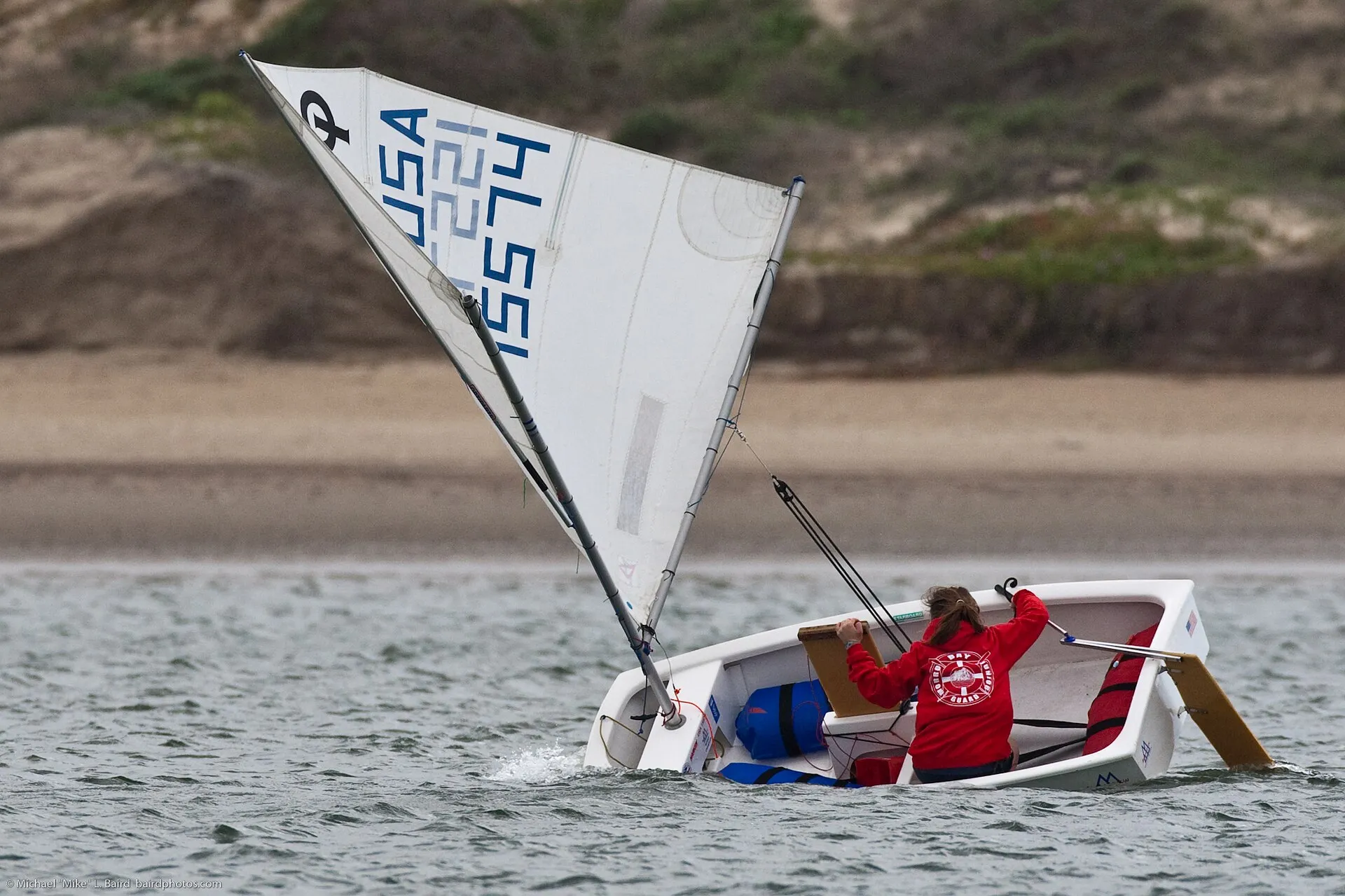
The sails are the yacht's engine, and their condition affects performance and safety. The cloth's greatest enemies are UV, chafe and bad storage. A regular inspection catches problems before a small seam failure turns into a tear at sea. It is worth doing the check at the end of the season, spreading the sail out on a clean, dry surface and going over it centimetre by centimetre.
The most common damage is worn seams, because polyester thread degrades under UV faster than the cloth itself. Check the seams along the leech, at the corner fittings and where the sail touches the spreaders and shrouds. Small failures can be sewn up on a sailmaking machine (zigzag) or by hand with a sailmaker's needle and waxed thread. Tears in the cloth can be secured for the time being with self-adhesive Dacron tape (Insignia and the like), which is enough to finish the trip.
The corners of the sail, the tack, reefing and clew fittings and the luff tape carry the greatest loads. Look at the corner patches, rings and reinforcing tapes, and leave damage to a sailmaker, because it needs solid reinforcement. Check the battens and their pockets for chafe and broken ends. The sun protection (Sunbrella) on a roller genoa breaks down in time — replacing it is cheaper than replacing a whole sail destroyed by UV.
Clean sails gently: rinse with fresh water and scrub stains with a soft brush and a mild, pH-neutral cleaner, avoiding aggressive bleach and high pressure, which destroy the proofing and the seams. Remove mould with specialist products, remembering that its stains can remain even once the mycelium is gone. After washing, the sail must dry completely before it is folded — damp is the straight road to mould and a bad smell.
How the sails are stored decides how long the cloth lasts. Laminates and membranes are better rolled than sharply folded, because creases break the fibres; classic Dacron tolerates folding, but it is still worth avoiding the same fold lines every time. Keep sails in a dry, airy, shaded place, ideally in bags of breathable fabric. Afloat, never leave sails spread out in the sun without need, or unsecured against flogging, which destroys the material very quickly.
Reefing and trim affect durability: excessive loads, a hard-tensioned backstay in light airs or constant flogging deform a sail. It is worth having a sailmaker do a periodic service including a shape measurement — a stretched, baggy sail can sometimes be re-cut. Investing in an inspection before a racing season or a longer trip pays for itself in reliability. A well-kept set of sails lasts many seasons and keeps its performance.
Safety and care: repairs use sharp tools (knives, needles, awls) — work attentively, and operate a big sewing machine according to its manual. Use adhesives and cleaning products in a ventilated place, wearing gloves. Lift heavy, wet sails with a technique that protects your back, ideally with two people. When working on deck, remember that a sail spread out is slippery and can act like a sail in the wind — secure it so it cannot blow away.
Material prices — products and options
Indicative prices in EUR (incl. VAT), as of July 2026. Products widely available in Europe; prices depend on the shop, the pack size and consumption. The links lead to example shops that ship across the EU. Dollar amounts are converted at 1 EUR = 1.1622 USD (ECB, 7 September 2026) and rounded — treat them as a rough guide, not a price in a US shop. Imperial values in brackets are conversions of the metric figure.
Self-adhesive Dacron tape (Insignia type)
- PSP Marine Tapes — Spinnaker/Sail Repair Tape 50 mm (1.97 in) × 4.5 m (14.8 ft)
self-adhesive repair tape, white and colours, for light sails and Dacron€10–12 (≈$12–14) - Bainbridge — Insignia / UV Patch & Sail Repair Tape
self-adhesive Dacron tape/cloth with UV protection, for reinforcements and leech covers€12–25 (≈$14–29) approximately - Challenge Sailcloth — Insignia Dacron Tape
self-adhesive Dacron tape for markings, numbers and small repairs€10–20 (≈$12–23) approximately
Sailmaker's needles, an awl and a leather palm
- SVB — Sailmaker's Palm (right-handed)
reinforced leather sailmaker's palm with an adjustable strap€28–29 (≈$33–34) - SVB — Sailmaker's Palm (left-handed)
version for left-handed users€31–32 (≈$36–37) - PRYM — Craftsman Needles
strong needles for thick fabrics and leather€5–7 (≈$6–8) - Compass24 — Sail Repair Kit
a set with a sailmaker's palm, needles, wax and waxed twine€20–35 (≈$23–41) approximately
Waxed polyester sail thread
- AMANN — Serabond
bonded polyester thread for sails and outdoor use, high UV resistance€8–20 (≈$9–23) / spool, approximately - AMANN — Serafil
multifilament polyester thread, proven on sails and heavy canvas€8–18 (≈$9–21) / spool, approximately - Compass24 — sail thread with a needle
sail thread with a needle included, a ready kit for small repairs€5–12 (≈$6–14) approximately
Dacron / spinnaker cloth patches
- PSP Marine Tapes — Spinnaker Repair Tape (ripstop nylon)
light self-adhesive patch for spinnakers and gennakers, many colours€10–12 (≈$12–14) - Bainbridge — Dacron Insignia Cloth (patch material)
self-adhesive Dacron cloth for cutting patches to any shape€15–30 (≈$17–35) approximately - SVB — sail repair patches and cloth
reinforcing material (Dacron) for repairing chafe and holes€10–30 (≈$12–35) approximately
A pH-neutral cleaner and a mould treatment
- Yachticon — Sail and Canvas Cleaner 500 ml (17 fl oz)
mild cleaner for white and coloured sails, biminis and sprayhoods€12–13 (≈$14–15) - Yachticon — Mould and Mildew Remover
removes mould stains, algae and green film from fabrics€12–13 (≈$14–15) - Star brite — Waterproofing + UV Spray
water-repellent proofing with UV protection for sails, covers and biminis€15–30 (≈$17–35) approximately
Spare battens and thimbles / rings
- SVB — Sail Battens (glass fibre)
glass laminate battens, cross-reinforced, various sections and lengths€8–40 (≈$9–46) approximately - SVB — thimbles, rings and eyelets
thimbles and rings reinforcing the sail corners and reefing eyes€2–15 (≈$2–17) approximately
Breathable fabric bags for storage
- Compass24 — sail bags
bags for the main, jib and spinnaker, versions in breathable fabric€20–60 (≈$23–70) approximately - SVB — sail bags and covers
bags for carrying and storing sails, various sizes€25–70 (≈$29–81) approximately
Sailmaking machine (optional)
- Compass24 — Sail Repair Kit II (hand-sewing alternative)
extended hand kit: palm, needles, waxed twine, beeswax€25–45 (≈$29–52) approximately - Sailmaking machine (zigzag, Sailrite or a used industrial one)
a machine with a strong zigzag for Dacron; new specialist models from a few hundred EURfrom €500 (≈$581) approximately