Varnishing yacht woodwork — 1K vs 2K varnish
Varnishing yacht woodwork — comparing 1K and 2K varnishes, number of coats, sanding between coats and UV protection.
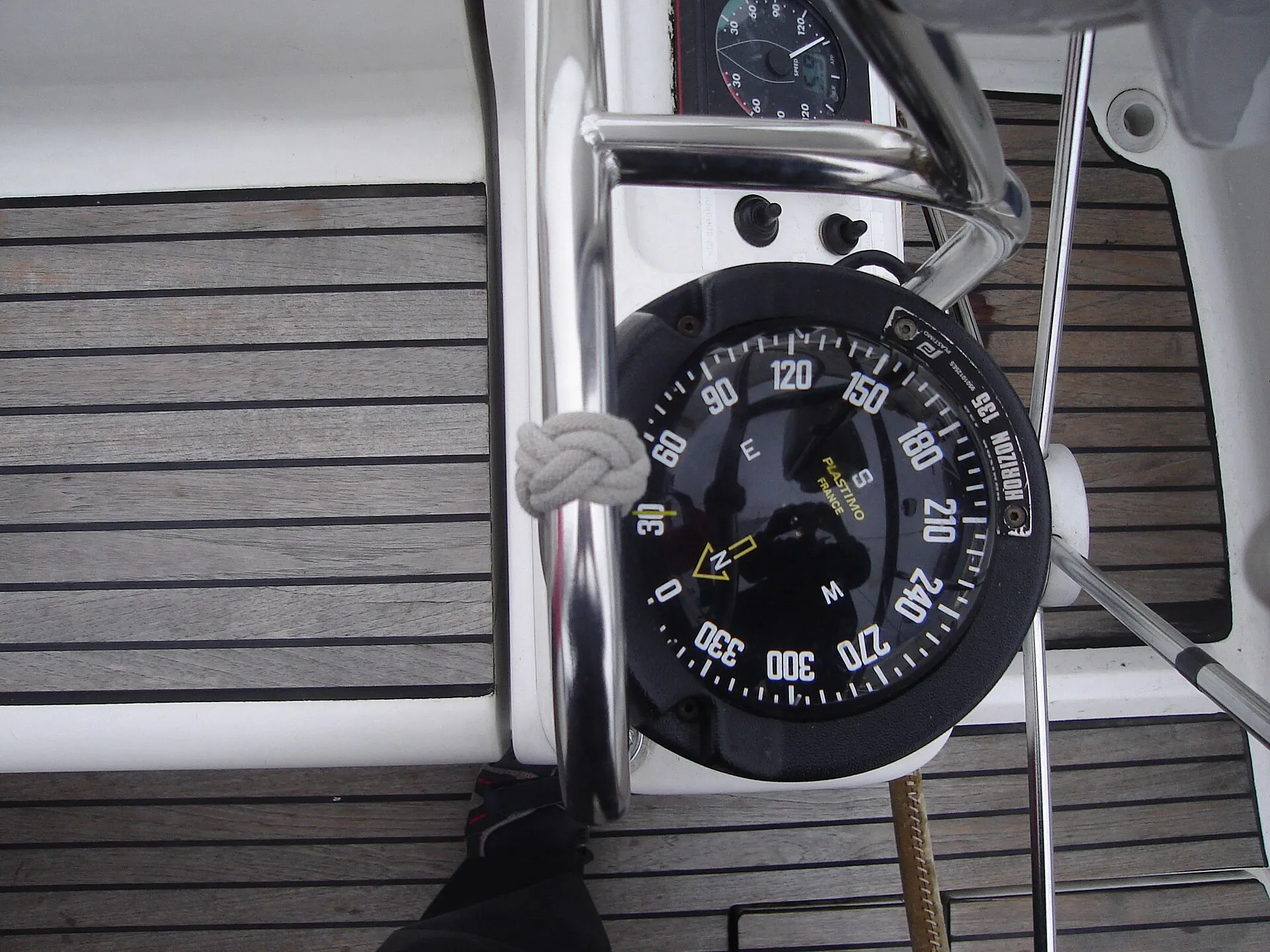
Varnishing wood on a yacht is both decorative and protective — it shows off the grain while protecting the wood from water and UV. Brightwork, as varnished woodwork is called, is the calling card of a well-kept boat, but it needs regular maintenance. The varnish's greatest enemy is the sun: UV breaks down both the film and the surface layer of wood beneath it, leading to yellowing and flaking. That is why the most important quality in a good yacht varnish is effective UV filters.
Single-pack (1K) varnishes, usually based on alkyd-urethane resins (traditionally called spar varnish), are easy to apply, flow well and stay flexible, which lets the wood move. They dry by evaporation and oxidation, and are easy to touch up and recoat without aggressive keying. The drawback is lower resistance and a shorter life — they need renewing more often, frequently with a refreshing coat every season. A good choice for traditional boats and for people who value simple care.
Two-pack (2K) polyurethane varnishes cure chemically once the hardener is added and form a much harder film, far more resistant to abrasion and chemicals, with an intense gloss. They last longer and need renewing less often, but they are less flexible, harder to apply and less forgiving of mistakes. Repairing a damaged patch can be awkward, because it calls for keying and for observing the overcoating windows. 2K makes sense on heavily exposed parts and wherever long life matters.
Whatever the type, the foundation is preparing the wood: stripping the old varnish, repairing damage, sanding along the grain with progressively finer paper (120, 180, 220, for example) and dusting off thoroughly, ideally with a tack cloth. Bare wood needs sealing coats — the first coats of varnish are thinned so that they penetrate deeply and build a base. The surface must be dry and degreased; oily wood such as teak often needs degreasing with solvent first, because the natural oils hinder adhesion.
A durable film is built from many thin coats — typically 6 and even 8–10 coats are recommended for full protection and depth. Between coats, key lightly with fine paper (320–400) and dust off, which ensures adhesion between coats and a smooth surface. Apply the varnish with a good brush, thinly and evenly, avoiding runs and working from the dry edge into the wet one (wet on wet). Thin coats dry faster, bond better and last longer than thick ones, which crack.
Apply it in a clean, dust-free and windless place, at the temperature and humidity the maker recommends, away from insects and from sun falling directly on fresh varnish. Once the film is built up, maintenance is crucial: a light key and one refreshing coat every year greatly extend its life and prevent an expensive rebuild from scratch. When the varnish starts to dull or yellow at the edges, act early, before water gets under the film. Neglected varnish has to be stripped back to bare wood and started again.
With 2K varnishes the safety rules are the same as for polyurethane paints — the hardeners contain isocyanates, so respiratory protection, gloves and ventilation are essential. With 1K, also take care over ventilation and skin protection, because the solvents are irritant and flammable. Clean brushes and tools with the appropriate thinner, and spread out rags soaked in varnishes that dry by oxidation until they are dry, because they can ignite spontaneously. Choosing the type of varnish deliberately for each part and maintaining it consistently is the key to beautiful, lasting brightwork.
Material prices — products and options
Indicative prices in EUR (incl. VAT), as of July 2026. Products widely available in Europe; prices depend on the shop, the pack size and consumption. The links lead to example shops that ship across the EU. Dollar amounts are converted at 1 EUR = 1.1622 USD (ECB, 7 September 2026) and rounded — treat them as a rough guide, not a price in a US shop. Imperial values in brackets are conversions of the metric figure.
Single-pack yacht varnish (spar varnish)
- Le Tonkinois — Marine Varnish
budget/natural: varnish based on linseed and tung oil, no thinner — 0.5–1 L (0.1 US gal–0.3 US gal)€15–45 (≈$17–52) - International — Compass
1K polyurethane, high gloss, very abrasion resistant, interiors and deck — 0.75 L (0.2 US gal)€30–55 (≈$35–64) - International — Schooner
premium 1K, amber tone, high UV stability and flow, teak/iroko — 0.75 L (0.2 US gal)€25–45 (≈$29–52) - International — Goldspar Satin
satin 1K varnish for interiors and parts less exposed to the sun — 0.75 L (0.2 US gal)€29–50 (≈$34–58) - Epifanes — Clear Varnish Gloss (1K)
premium: tung oil + phenolic resins, high gloss, UV filter, the restoration classic — 0.5–1 L (0.1 US gal–0.3 US gal)€30–55 (≈$35–64) - Epifanes — RapidClear Semi-Gloss
fast-drying, semi-matt, applied without keying between coats — 0.75 L (0.2 US gal)€30–38 (≈$35–44)
Two-pack polyurethane varnish (2K) with hardener
- Epifanes — 2K PU Clear Varnish High-Gloss
clear 2K varnish with hardener, maximum hardness and gloss — set€52–95 (≈$60–110) - International — Perfection Plus 2K Clear
two-pack acrylic-urethane varnish, very high UV and chemical resistance — set€60–110 (≈$70–128) - Epifanes — 2-K PP Varnish Extra
high-build premium 2K, fewer coats for a full film — 0.75 L (0.2 US gal) set€100–115 (≈$116–134)
Thinners (as recommended by the maker)
- Epifanes — Paint/Brush Thinner (for 1K)
thinner for single-pack varnishes, improves flow — 1 L (0.3 US gal)€15–25 (≈$17–29) - International — Thinner No.1
all-purpose thinner for International 1K varnishes — 0.5–1 L (0.1 US gal–0.3 US gal)€18–28 (≈$21–33) - Epifanes — Brush Thinner for 2K PU
thinner for applying 2K polyurethane varnishes by brush/roller — 1 L (0.3 US gal)€25–33 (≈$29–38) - Epifanes — 2-K Varnish Thinner (spray)
thinner for spraying 2K varnishes — 1 L (0.3 US gal)€28–33 (≈$33–38)
Abrasive paper (120, 180, 220 and 320–400)
- 3M — Wetordry waterproof paper
sheets for wet keying, grit 320–600 — pack/sheet€1–3 (≈$1–3) / sheet - Mirka — sheets/discs 120–220
paper for dry sanding, set of coarser grits — pack€12–25 (≈$14–29) - Mixed set 120/180/220/400
set of grits for the whole process (coarse sanding + keying) — set€10–20 (≈$12–23)
Varnish brushes and rollers
- Flat varnish brushes
good-quality flat brushes with natural bristle, various widths — each€4–12 (≈$5–14) - Yachticon — Pro foam roller (1K/2K)
dense foam roller for single- and two-pack varnishes, a smooth film — each€5–8 (≈$6–9) - PU foam radiator roller
small foam roller for awkward places and narrow trims — each€3–5 (≈$3–6) - Foam brushes
disposable foam applicators, a smooth coat without streaks — set€1,5–3 (≈$2–3)
Tack cloth and lint-free cloths
- Tack cloth
impregnated cloth for picking up dust before varnishing — each/set€2–6 (≈$2–7) - Lint-free cloths (microfibre)
leave no fibres, for degreasing and wiping — pack€5–12 (≈$6–14) - Cellulose/cotton cloths
absorbent disposable cloths for painting work — roll/pack€4–10 (≈$5–12)
Degreasers and cleaners (preparing teak)
- Yachticon — Teak Super Cleaner
budget: cleaner for preparing teak before varnishing — 0.5 L (0.1 US gal)€10–15 (≈$12–17) - Yachticon — Synthetic Teak & Wood Cleaner
synthetic wood cleaner, gentler on the grain — 0.5 L (0.1 US gal)€13–18 (≈$15–21) - Sika — Teak Cleaner
premium: professional teak cleaner, thorough removal of the natural oils — 1 L (0.3 US gal)€18–25 (≈$21–29)
Masking tape
- 3M Scotch — 471+ (blue)
premium: tape with a very precise edge, resistant to solvents — 33 m (108.3 ft)€8–15 (≈$9–17) - All-purpose masking tape
budget: standard paper tape for painting work — 50 m (164 ft) roll€4–10 (≈$5–12)
Personal protection
- Protective gloves (nitrile)
gloves resistant to solvents and varnishes, reusable — pair€6–12 (≈$7–14) - Disposable nitrile gloves (pack)
box of disposable gloves for quick jobs and frequent changes — 100 pcs€8–15 (≈$9–17) - 3M — half mask with A2 filters (organic vapours)
respiratory protection for 2K PU and solvents — set with filters€25–60 (≈$29–70) - 3M — safety glasses
goggles/glasses protecting the eyes from dust and splashes — each€8–20 (≈$9–23)
Price sources: svb24.com, compass24.com and the makers' own sites (Epifanes, International, Le Tonkinois, 3M, Mirka, Sika, Yachticon).