Repairing the rudder and rudder stock
Diagnosing and repairing the rudder and stock — bearing play, a waterlogged blade, shaft corrosion and laminate rebuilding.
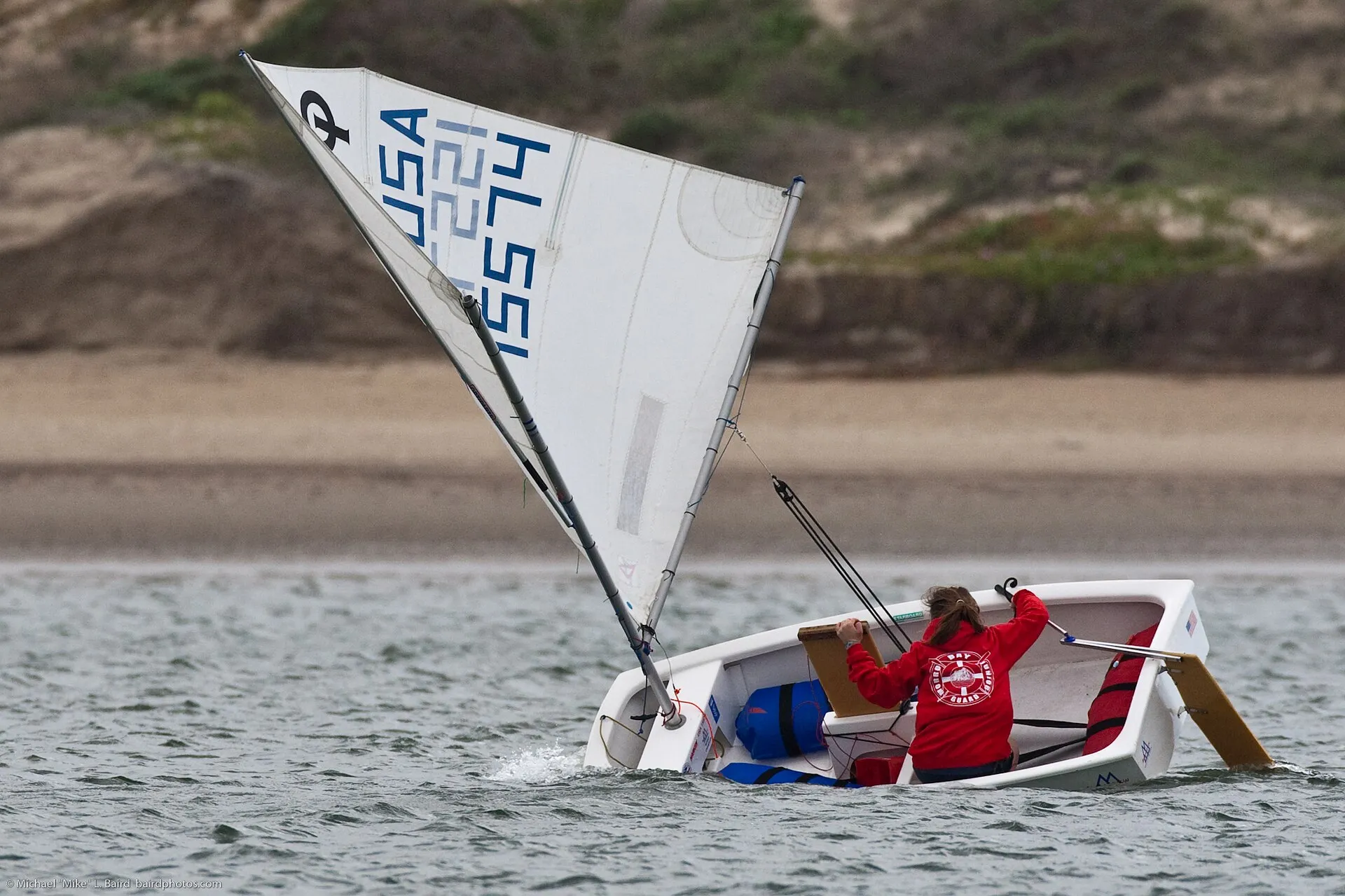
The rudder is critical to safety — its failure leaves the yacht unsteerable, often at the least convenient moment. A typical modern rudder is a hollow laminate blade filled with foam, mounted on a metal stock with welded webs, turning in bearings in the hull. The most common problems are play in the bearings, a waterlogged blade, corrosion and cracks in the stock, and delamination where the blade joins the stock. Checking the rudder should be a fixed part of the annual service ashore.
Diagnosis starts with checking for play: hold the rudder blade and try to move it in different directions, assessing the play in the bearings (usually two — upper and lower) and any play between the blade and the stock. Excessive play speeds up wear and risks damage. Next look for gelcoat cracks around the stock and along the edges of the blade, and for signs of water ingress: water running out after drilling, a change in weight, stains and blisters. Tapping the blade helps detect delamination — a dull sound signals a void or a debonded area.
A waterlogged blade is a common problem — water gets in through micro-cracks, especially around where the stock exits, soaks the foam and weakens the laminate. In a colder climate freezing water bursts the blade as well. The repair means drying the inside (for example by drilling drain holes at the lowest point and drying for a long time) and, in worse cases, cutting the blade open, removing the ruined foam, drying and rebuilding. After drying, the holes and cracks are sealed with epoxy and laminate, restoring watertightness.
Corrosion of the stock can be insidious, because the shaft is hidden inside the blade. In stainless steel the danger is crevice and pitting corrosion in an oxygen-free zone inside wet laminate — the stock can look fine on the outside and be weakened within. If there is any suspicion, the stock has to be exposed and assessed, and if necessary tested or replaced by a specialist, because a broken stock means losing the rudder. The welds of the webs must be free of cracks, because they transfer the whole torque to the blade.
Rudder bearings may need adjusting or replacing when there is excessive play, depending on the design. Modern boats often have composite (self-lubricating) bearings, which wear over time. Replacement usually means lowering the rudder, which is done ashore with proper support and a crane or hoist, taking care because of the weight. After replacement, check that it turns smoothly over the full range of movement and that there is no play.
Rebuilding the laminate of the blade is done like hull repairs: bevel the edges, lay glass fabric in epoxy, rebuild the profile and finish. Keeping a symmetrical, smooth hydrodynamic profile is very important, because an uneven rudder worsens handling and can start to vibrate. After the repair the blade is coated with a barrier coat and antifouling like the rest of the underwater body. Balance and a fair outline have a real effect on how the rudder works under load.
Because the rudder is so critical, if you have any doubt about the state of the stock or its welds it is worth consulting a specialist rather than taking a risk. Work with proper support and help when handling heavy parts, and use protection when sanding and laminating (P3 mask, gloves, goggles). Keep a record of the condition and the repairs done, including photos of the stock. A sound, watertight and well seated rudder is the basis of safe sailing — this is no place for a makeshift job.
Material prices — products and options
Indicative prices in EUR (incl. VAT), as of July 2026. Products widely available in Europe; prices depend on the shop, the pack size and consumption. The links lead to example shops that ship across the EU. Dollar amounts are converted at 1 EUR = 1.1622 USD (ECB, 7 September 2026) and rounded — treat them as a rough guide, not a price in a US shop. Imperial values in brackets are conversions of the metric figure.
Epoxy resins and hardeners
- West System — 105 resin + 205 hardener (A-pack)
the reference epoxy for laminating and rebuilding the blade, approx. 1.2 kg (2.6 lb) (premium)€30–45 (≈$35–52) - Epifanes / SP — laminating epoxy resin
resin and hardener kit for structural repairs (mid-range)€25–40 (≈$29–46) (approx.) - R&G / Resion — epoxy resin 1 kg (2.2 lb)
general-purpose laminating resin for the workshop (budget)€18–30 (≈$21–35) (approx.)
Fillers and thickeners
- West System — 404 high-density filler
structural filler for bonding and filleting under load€14–22 (≈$16–26) - West System — 406 colloidal silica
thickener that stops resin running on vertical surfaces€10–18 (≈$12–21) - Microballoons / fairing filler
lightweight filler for finishing and fairing (budget)€8–20 (≈$9–23) (approx.)
Glass fabrics and mats
- Biaxial glass fabric 300–600 g (21 oz)/m²
structural fabric for reinforcing the blade, by the metre (mid-range)€8–20 (≈$9–23)/m (approx.) - Roving fabric / chopped strand mat
roving and mat for building up laminate thickness (budget)€5–15 (≈$6–17)/m (approx.) - Filling foam / PVC core
structural foam for filling the inside of the blade (premium)€20–60 (≈$23–70) (approx.)
Rudder bearings
- Jefa — self-lubricating rudder bearing
composite bearing, sized to the stock diameter, made to order (premium)€350–550 (≈$407–639) (approx.) - Lewmar — lower rudder bearing 60 mm (2.36 in)
GRP laminate with Delrin rollers and a neoprene seal (mid-range)€300–480 (≈$349–558) (approx.) - Replacement rudder bush / bearing shell
plain bush for simple systems, sized to the diameter (budget)€40–150 (≈$46–174) (approx.)
Barrier coat, antifouling and safety
- International — Gelshield / barrier coat
epoxy primer sealing the repaired laminate (mid-range)€40–75 (≈$46–87) (approx.) - Antifouling for the finish (International / Hempel)
antifouling paint for the rudder blade, 0.75–2.5 L (mid-range)€25–90 (≈$29–105) (approx.) - Sandpaper 40–400, P3 mask, gloves, goggles
abrasives and personal protective equipment€15–40 (≈$17–46) (approx.)
Price sources: svb24.com, compass24.com and the manufacturers' websites (West System, Jefa, Lewmar, International). Indicative prices — check the current ones with the seller.