Servicing refrigeration and the yacht fridge
How to maintain and service a yacht fridge: compressor, evaporator, condenser ventilation and cool box insulation.
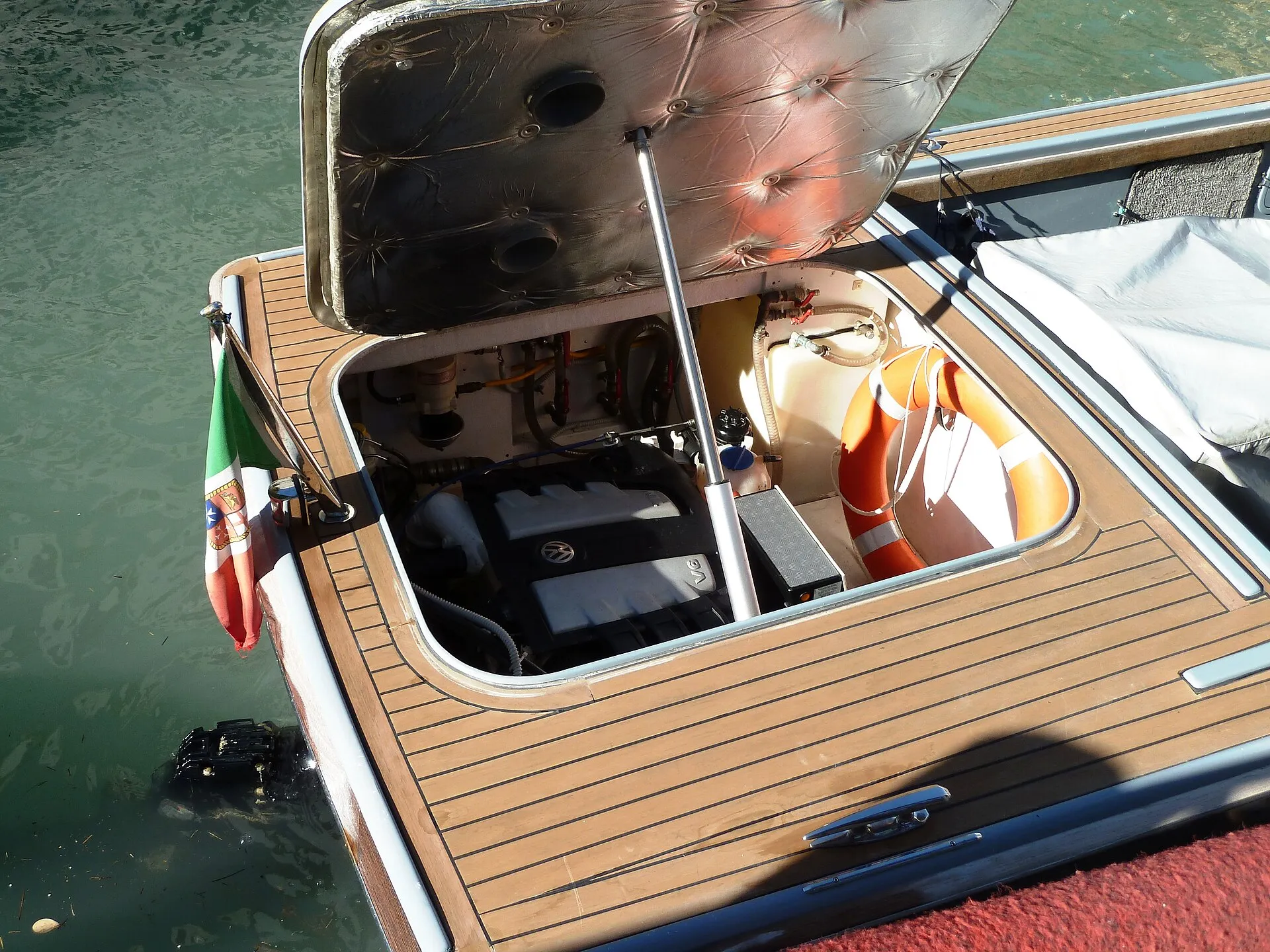
The fridge is usually the biggest consumer on a yacht's 12 V system, so its efficiency feeds straight into the boat's energy budget. The most common arrangement is a compressor unit (a Danfoss/Secop BD35 or BD50) cooling an evaporator in the cool box. Before you start replacing components, work out whether the problem is poor cooling, excessive current draw or noise — each has different causes. Most often the appliance is not to blame; its working conditions are: condenser cooling and insulation.
The condenser has to give up its heat — air-cooled versions need free airflow and a way for the hot air to leave the enclosure. The most common mistake is a unit squeezed into a sealed locker, drawing in its own hot air. Clean dust and grease off the condenser fins (brush, compressed air) and provide an inlet and an outlet, possibly fitting a small thermally controlled fan. On water-cooled systems (a keel cooler or heat exchanger), check that the exchanger is clear and clean.
The evaporator and its frosting is the next thing to check. A thick layer of ice on the evaporator acts as insulation, worsens heat exchange and increases current draw — so defrost the box periodically. Check the position of the sensor/thermostat too: it should be in good thermal contact and not frosted over in a way that falsifies the reading. The door or lid of the box must close tightly with a good seal, because every gap is a constant supply of moisture and heat.
The insulation of the cool box decides energy consumption more than the unit itself. Factory boxes are sometimes insulated with only a few centimetres of foam, which is far from ideal. If you are upgrading a box, aim for a thick layer of closed-cell polyurethane foam (the more the better, in practice 5–10 cm (1.97 in–3.94 in)); the top lid is often the least insulated part — a common place for losses. A well-insulated box lets the unit run in shorter cycles and greatly reduces current draw.
The electrical side deserves attention because of the compressor's starting currents. The supply should run in cable thick enough to keep the voltage drop minimal, with the right fuse — cable that is too thin causes voltage drops at which the module's electronics cut the compressor out (fault codes shown by the flashing LED). Check that the terminals are clean and tight, the state of the fuse and the voltage right at the module while the compressor is running.
Diagnosing the BD35/BD50 control module rests on the number of flashes of the fault LED: they signal low voltage, compressor overload or a fan fault, among others. If the compressor tries to start and cuts out cyclically, deal first with the supply and with an overheated condenser, and only then suspect the compressor itself. Genuine loss of refrigerant from a hermetic circuit is rare, but if the system cools poorly despite good ventilation, it may need attention from a properly qualified refrigeration technician.
Finally, optimise how you use it: load the fridge with already chilled food, avoid opening it often, and possibly add a eutectic cold accumulator to smooth the cycles. NOTE: working on the refrigerant circuit (R134a, R600a) requires F-gas certification and the right equipment — opening the circuit yourself is illegal and dangerous. Most problems, though, are solved by cleaning, ventilation and insulation, which you can do yourself.
Material prices — products and options
Indicative prices in EUR (incl. VAT), as of July 2026. Products widely available in Europe; prices depend on the shop, the pack size and consumption. The links lead to example shops that ship across the EU. Dollar amounts are converted at 1 EUR = 1.1622 USD (ECB, 7 September 2026) and rounded — treat them as a rough guide, not a price in a US shop. Imperial values in brackets are conversions of the metric figure.
12/24 V fridges and compressor units
- Vitrifrigo — C39i (classic, 39 l (10.3 US gal))
built-in compressor fridge, front-loading, the budget option€650–780 (≈$755–907) - Isotherm (Indel Marine) — Cruise 42L (11.1 US gal)
built-in, Secop BD35 compressor, removable unit€780–950 (≈$907–1,104) - Dometic (Waeco) — CoolMatic CRP40
premium, 12/24 V/solar, freezer compartment ~5 l (1.3 US gal)€1000–1200 (≈$1,162–1,395) - Isotherm / Secop — refrigeration kit (evaporator + compressor)
for building into your own cool box€350–650 (≈$407–755)
Cleaning the condenser
- Condenser fin brush
soft brush for removing dust from the cooler€5–12 (≈$6–14) - Compressed air in a spray can
for blowing out the condenser and the fan€6–14 (≈$7–16)
Insulation and seals
- Closed-cell PU foam (can)
topping up the insulation of the cool box€10–20 (≈$12–23) - Self-adhesive EPDM gasket
sealing tape for the lid or locker door€8–18 (≈$9–21) - Armaflex — self-adhesive insulation mat
rubber insulation for lining the box€15–35 (≈$17–41)
Ventilating the unit
- 12 V fan (axial)
forced air circulation at the condenser€10–25 (≈$12–29) - 12 V thermostat / sensor for the fan
switches the fan on by temperature€8–20 (≈$9–23)
Wiring
- Tinned marine cable (by the metre)
the right cross-section for supplying the fridge€2–5 (≈$2–6) / m - Fuse with a holder and terminals
circuit protection, a set of connectors€8–18 (≈$9–21) - Digital multimeter
measuring voltage and continuity€15–50 (≈$17–58)
Temperature control and eutectic cold
- Fridge thermometer
monitoring the temperature of the cool box€5–15 (≈$6–17) - Eutectic plate / cold accumulator
smooths out the compressor's cycles€40–120 (≈$46–139) (approx.)